How to Choose the Right Mighty Line Safety and Information Floor Tape
How to Choose Mighty Line Safety and Information Floor Tape
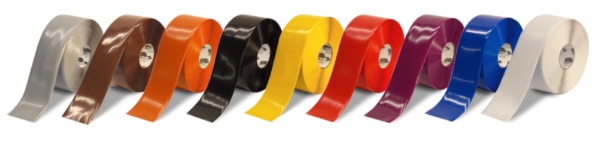
Mighty Line Safety and Information Floor Tape is built for industrial floor marking where durability, visibility, and easy replacement matter. Official Mighty Line materials highlight heavy-duty floor-marking options, including solid, diagonal, anti-slip, glow-in-the-dark, reflective, and specialty tapes. They also note common use on concrete, epoxy-coated, vinyl, tile, polished, sealed, and some painted surfaces, plus a 3-year limited warranty on many floor tape products. Your current category page also positions the tape as a 50 mil, beveled-edge solution for forklift traffic, pallet jacks, carts, and industrial scrubbers.
How to purchase Mighty Line Safety and Information Floor Tape
Start by identifying exactly what you need to mark. Buyers usually choose floor tape based on traffic type, floor surface, tape width, message or color needs, and whether the area requires standard marking or slip resistance. Mighty Line offers multiple widths, including 1 inch, 2 inch, 3 inch, 4 inch, and 6 inch, along with specialty options for high-traffic and slippery areas. Anti-slip products are better for pedestrian safety zones, while standard solid or diagonal tapes are better for lanes, staging areas, and visual organization.
Before ordering, measure the full area and map the layout. For example, wide forklift lanes and pedestrian walkways often need broader, high-visibility tape, while storage boundaries, work cells, and bin outlines may use narrower tape or segmented markers. If the floor is exposed to moisture, dirt, or aggressive cleaning, prep, and maintenance matter just as much as the tape choice. Mighty Line recommends applying tape to a clean, dry surface and notes that floor temperature should be above 50°F for best adhesion.
What to look for before you buy
♦ Traffic level
Choose a tape that can handle your environment. Mighty Line positions its products for heavy industrial use, including wheel traffic and busy facilities. Beveled edges help reduce edge lift and premature wear.
♦ Standard vs anti-slip
Use standard floor marking tape for aisles, boundaries, work zones, and storage areas. Use anti-slip tape for stairs, ramps, slick surfaces, and pedestrian areas where extra traction is needed.
♦ Tape width
Mighty Line offers several widths, so match the width to visibility needs and traffic type. Narrower widths work well for outlines and light-duty visual marking. Wider widths are better for aisles, safety lanes, and high-visibility zone marking.
♦ Color and message clarity
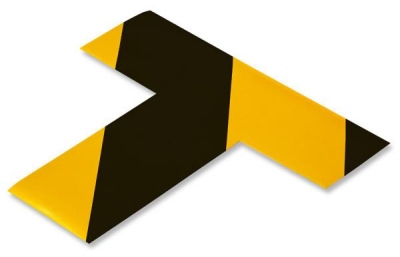
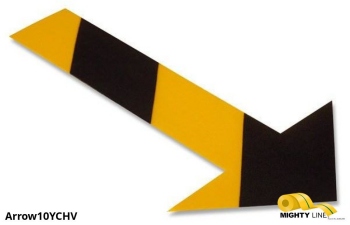
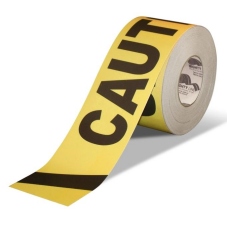
Solid colors are typically used for area identification and organization. Diagonal, striped, glow, and message tapes are better for hazards, restricted access, caution zones, and emergency awareness.
♦ Surface compatibility
Common approved surfaces include concrete, epoxy-coated floors, vinyl, tile, polished floors, sealed floors, metal, and some painted floors. Testing a small section first is smart if the floor has sealers, coatings, or older paint.
♦ Installation and maintenance
The best tape still fails on a dirty floor. Mighty Line recommends surface cleaning, checking for moisture issues in damp areas, and avoiding harsh cleaners that can degrade adhesive performance.
Best use of Mighty Line Safety and Information Floor Tape
The best use for Mighty Line floor tape is to create durable visual controls that improve safety, traffic flow, and workspace organization without the downtime of painted markings. It is especially useful in warehouses, manufacturing plants, distribution centers, retail backrooms, schools, hospitals, and government facilities where clear floor communication improves efficiency and reduces confusion.
Good applications include:
♦ marking pedestrian walkways
♦ separating forklift lanes from foot traffic
♦ outlining staging, storage, and pallet zones
♦ identifying work cells and production areas
♦ posting repeating safety messages such as caution or authorized personnel only
♦ adding anti-slip marking to stairs, ramps, and slick walkways
♦ using glow or specialty markings for visibility in low-light or emergency areas