
How to Select Barriers and Machine Protection for Industrial Safety
How to Select Barriers and Machine Protection in Industrial Settings
The right barrier or machine protection system depends on the hazard you are trying to control. In most industrial settings, bollards are best for point protection, guard rail systems are best for continuous perimeter or traffic-lane protection, and machine guards are best for isolating moving hazards at or around equipment. A strong layout usually uses more than one of these products, so pedestrian areas, equipment, building columns, doors, and machines are protected under a single safety plan. OSHA also requires safeguarding machine hazards when machine parts, functions, or processes may cause injury.
Start by mapping where impacts or contact are most likely to happen. Look at forklift travel paths, rack intersections, machine operating zones, pedestrian routes, dock areas, columns, door openings, and maintenance access points. Then choose protection based on whether the risk comes from moving vehicles, recurring traffic, accidental contact, or dangerous machine motion. That helps prevent the common mistake of using a single barrier type for every hazard.
What to Look For
♦ 1) Type of Hazard
Choose the product based on the actual risk. Use bollards where specific assets need impact protection, such as corners, doorways, rack ends, control panels, and machine corners. Use guard rail where you need a longer run of protection along traffic lanes, pedestrian walkways, work zones, or building walls. Use machine guards where employees could contact rotating parts, nip points, sparks, chips, or point-of-operation hazards.
♦ 2) Traffic Level and Impact Exposure
Higher traffic areas need stronger protection and better placement. If forklifts, pallet jacks, carts, or other powered vehicles travel near equipment or pedestrian areas, choose heavier-duty systems designed for repeated industrial impacts. Facilities with busy intersections or tight turning areas often benefit from layered protection using both bollards and guard rail.
♦ 3) Mounting and Installation Style
Look closely at how the barrier installs and where it will sit. Surface-mounted products are common for retrofits and clearly defined interior protection points, while more permanent embedded or core-installed options are often used where higher-impact protection is needed. For machine guards, OSHA states that guards should be attached to the machine where possible; if that is not possible, they should be attached elsewhere.
♦ 4) Visibility and Layout Fit
High-visibility finishes, clear lane definition, and layouts that avoid blind spots matter just as much as strength. The right barrier should protect people and equipment without blocking necessary sightlines, maintenance access, or material flow. Machine guards also must not create new hazards of their own.
♦ 5) Maintenance and Access
Protection should not make equipment harder to service or create workarounds that employees bypass. Good machine protection allows safe operation and safe maintenance access. OSHA notes that removable guards should be interlocked where needed, and replacing a guard should not automatically restart the machine.
♦ 6) Heavy-Duty Steel Square Bollards
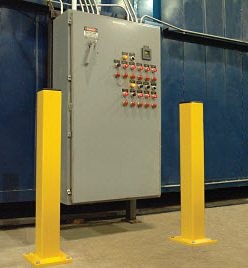
Heavy-duty steel bollards are best when you need focused impact protection at a specific point. Common applications include building corners, dock doors, rack ends, machine corners, utility lines, control stations, and pedestrian crossing entries. They create a visible physical barrier that helps stop or deflect accidental vehicle contact before it reaches the asset behind it.
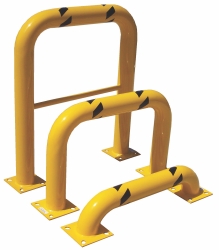
♦ 7) Heavy-Duty Steel Round Bollards. Round bollards are often chosen when a traditional pipe-style barrier is preferred and where galvanizing or weather resistance matters. Square bollards are often selected when a flat-sided profile, plate-mounted appearance, or a more architectural look better fits the facility. Both shapes are used in industrial protection, so the choice usually comes down to mounting style, layout, appearance, and the required level of protection.
♦ 8) Industrial Safety Guard Rail Systems
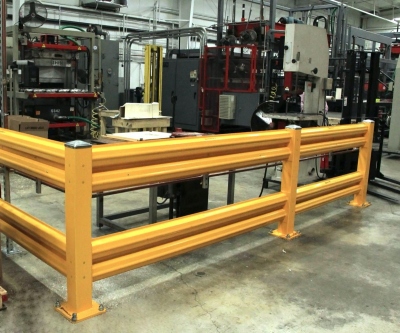
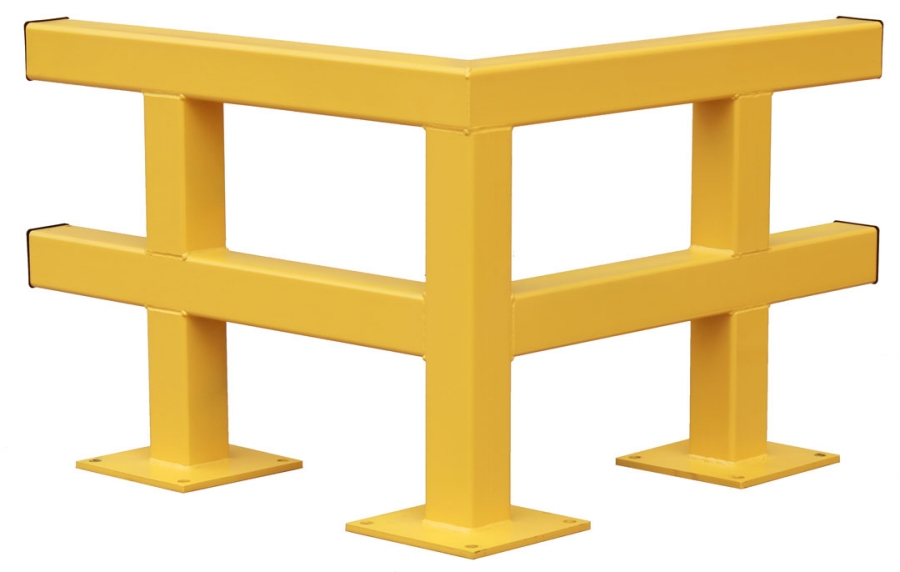
-Industrial safety guard rail systems are the better choice when you need continuous protection instead of isolated point protection. They work especially well along forklift lanes, pedestrian walkways, machine perimeters, mezzanine edges, production zones, building walls, and rack rows where repeated vehicle traffic creates a longer exposure area. In most facilities, guardrails are the products that define safe travel paths and help separate traffic from people and infrastructure.
-When selecting guardrail, consider run length, post spacing, rail height, corner sections, end treatments, and whether the system can expand as the layout changes. A good system should align with the traffic pattern and provide clear, continuous protection without unnecessarily interrupting workflow.
♦ 9) Industrial Machine Protection and Safety Guard
Machine protection and safety guards are used to isolate workers from moving parts and hazardous machine zones. OSHA states that one or more methods of machine guarding must be provided to protect operators and other employees from hazards created by the point of operation, ingoing nip points, rotating parts, flying chips, and sparks. Common safeguard types include barrier guards, fixed guards, interlocked guards, and other protective devices, depending on the machine and operation.
The best machine guard is the one that prevents contact with the hazard without interfering with safe production. It should allow the machine to be used properly, avoid creating new pinch points or access issues, and support inspection and maintenance. Barrier guards are often one of the first safeguard types considered for machines because they physically keep hands and arms out of the danger zone.
Best Use of These Products
The best use of bollards, guardrail systems, and machine guards is to create layered industrial protection. Bollards are best for protecting individual assets. Guard rail systems are best for longer runs and traffic separation. Machine guards are best for controlling direct exposure to hazardous machine motion. Used together, they help reduce equipment damage, worker injury risk, and unplanned downtime in warehouses, manufacturing plants, service areas, and distribution facilities.
Why Use This Product
Industrial barriers and machine protection help reduce damage and control risk in active work environments. Each solution is designed to address a specific type of hazard, from vehicle impact to machine motion. Using the correct barrier type improves safety without restricting workflow. OSHA requires safeguarding when machine parts or processes may cause injury. A planned approach helps ensure compliance while improving daily operations.
How It Helps Your Operation
Barrier systems help organize traffic flow and separate pedestrians from equipment movement. This can reduce accidents, product damage, and downtime caused by collisions. Machine guards help prevent contact with moving components during normal operation and maintenance. A well-designed system supports safer movement throughout the facility without blocking key access points. Combining bollards, guard rail, and machine protection creates a more controlled and efficient work environment.


