
Heavy-Duty Industrial Transport Carts Buying Guide
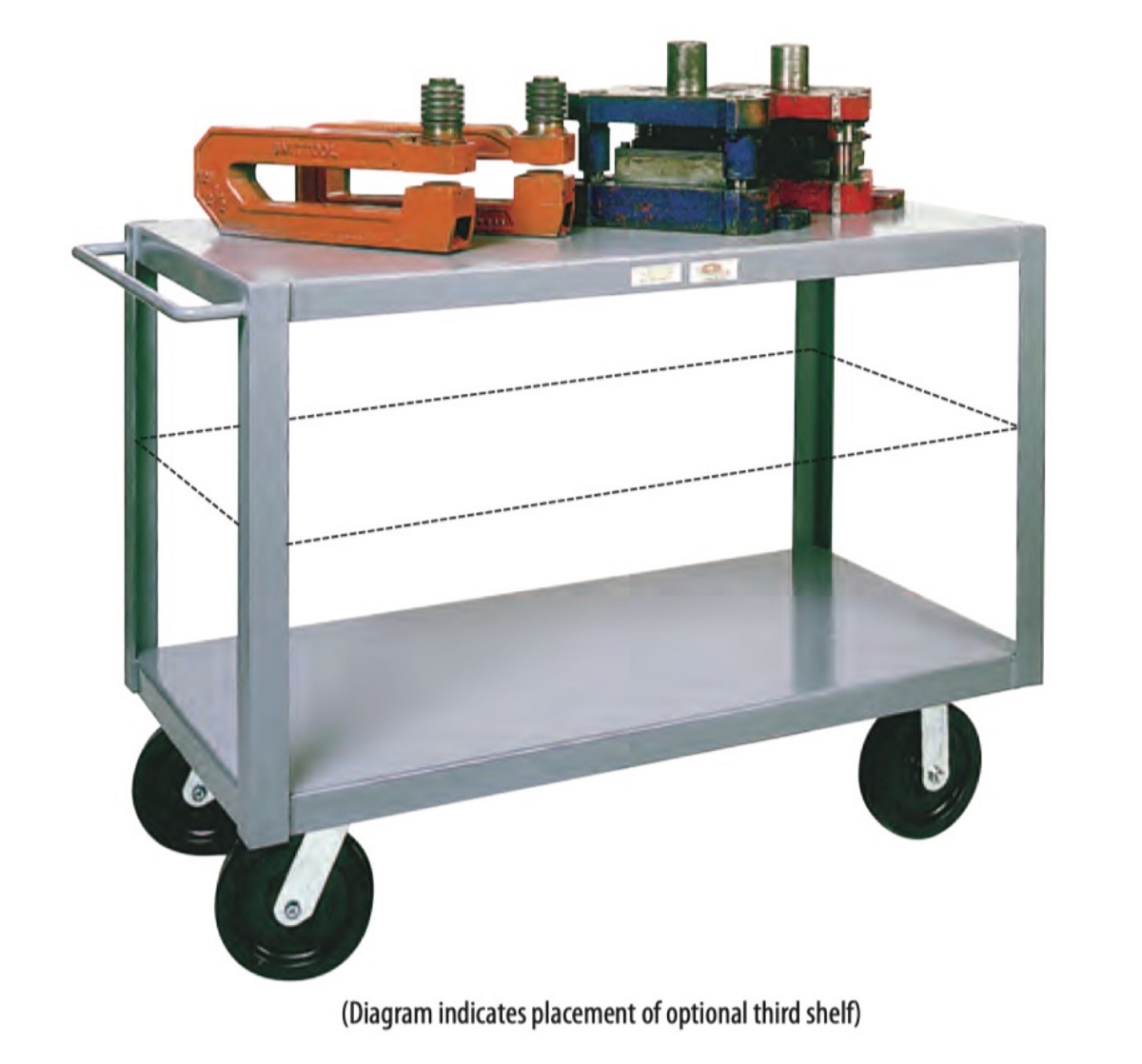
Heavy-Duty Industrial Transport Carts Buying Guide
Heavy-duty industrial transport carts are built to move materials, tools, parts, products, and equipment safely and efficiently through warehouses, manufacturing plants, distribution centers, maintenance areas, commercial facilities, and back-of-house operations.
When your team needs to move more in fewer trips, reduce unnecessary lifting, protect materials from damage, and keep production moving, the right transport cart can make a measurable difference. These carts provide a stable mobile platform for daily material-handling tasks, from moving oversized loads across a production floor to staging inventory in a warehouse to transporting tools and equipment for maintenance work.
Choosing the best cart depends on your load size, weight capacity, floor conditions, workflow, storage needs, and how often the cart will be used.
What Are Heavy-Duty Industrial Transport Carts?
Heavy-duty transport carts are material handling carts designed for demanding commercial and industrial environments. Unlike light-duty utility carts, industrial transport carts are built for heavier loads, frequent use, and tougher working conditions.
They are commonly used to move:
♦ Boxes, cartons, and packaged goods
♦ Machinery parts and components
♦ Tools, dies, molds, and fixtures
♦ Maintenance supplies and equipment
♦ Finished products and work-in-process materials
♦ Bulk inventory and warehouse supplies
♦ Oversized, awkward, or heavy loads
Your current category includes several styles of transport carts and mobile tables, such as service carts, transport carts, stainless carts, and mobile machine tables, with capacities listed for each model.
Why the Right Transport Cart Matters
A transport cart is not just a piece of equipment. It affects labor efficiency, product flow, worker safety, and the speed at which materials move through your operation.
In facilities where employees repeatedly lift, carry, push, pull, stage, and transport materials, poor cart selection can create bottlenecks. The wrong cart may be too small, too hard to maneuver, under-rated for the load, difficult to load, or poorly matched to the work environment.
The right heavy-duty cart helps your team:
♦ Move heavier loads with better control
♦ Reduce the number of trips required
♦ Improve staging and internal transport
♦ Keep tools and materials organized
♦ Reduce unnecessary manual carrying
♦ Support safer material handling practices
♦ Protect products from drops, dragging, or unstable movement
♦ Improve workflow between departments
Manual material handling is a major source of ergonomic risk, and NIOSH notes that this type of work contributes to many musculoskeletal disorders involving the lower back, shoulders, and upper limbs.
How to Choose the Right Heavy-Duty Transport Cart
1) Start With Load Capacity
The first question is simple: How much weight does the cart need to carry?
Do not choose a cart based only on the average load. Choose based on the heaviest realistic load your team may move. If your normal load is 800 lb. but your heaviest load is 1,500 lb., you need to size the cart for the heavier load.
Look for:
♦ Rated load capacity
♦ Steel frame construction
♦ Deck strength
♦ Load distribution requirements
♦ Wheel and caster ratings
♦ Frequency of use
♦ Whether the load is centered or uneven
For demanding industrial use, it is better to have more capacity than barely enough. An undersized cart can wear out faster, become harder to control, and create avoidable safety risks.
2) Match the Deck Size to the Load
The cart deck should support the full footprint of the load. If materials hang too far over the edge, the load may become unstable or difficult to control.
Before buying, confirm:
♦ Load width
♦ Load length
♦ Load height
♦ Aisle clearance
♦ Doorway clearance
♦ Turning space
♦ Elevator or dock access
♦ Whether the cart must fit under benches, racks, or work surfaces
A larger cart can carry more material, but it may also be harder to maneuver in tight aisles. The best choice balances capacity with real-world facility movement.
3) Consider Maneuverability and Floor Conditions
Casters are one of the most important parts of an industrial transport cart. The frame holds the load, but the casters determine how easily the cart moves, turns, starts, and stops.
Look at:
♦ Wheel diameter
♦ Wheel material
♦ Swivel casters
♦ Rigid casters
♦ Brake options
♦ Floor surface
♦ Debris, oil, moisture, or uneven areas
♦ Travel distance
♦ Frequency of turns
For long, straight travel, a combination of rigid and swivel casters can improve tracking. For tight turning areas, all-swivel casters may improve maneuverability. For heavier loads, larger wheels often roll more easily over imperfect floors.
OSHA guidance notes that material-handling equipment should be easy to move and that its handles should support an upright posture when pushing or pulling.
4) Look at Handle Design and Operator Control
A cart should be easy to push, steer, stop, and position. Handle placement matters because poor handle height or awkward grip positions can make the cart harder to control.
A good industrial transport cart should help the operator:
♦ Maintain a more natural posture
♦ Push instead of pull when possible
♦ Keep your hands away from pinch points
♦ Control the cart during turns
♦ Stop and position the load safely
♦ Move materials without excessive force
Pushing is generally preferred over pulling when moving carts, and OSHA specifically notes that high-strength push/pull requirements are undesirable.
5) Think About Workflow, Not Just the Cart
The best cart is the one that fits the way your facility actually works.
Ask:
| ♦ Where does the material start?
♦ Where does it need to go?
♦ How many times is it handled?
♦ Can the cart reduce the need for extra lifting or carrying?
♦ Can it stage materials closer to the point of use?
♦ Can it reduce forklift trips?
♦ Will the cart move through tight aisles or high-traffic areas?
♦ Does the load need to stay organized during transport?
California’s ergonomic material handling guidance recommends planning workflow to eliminate unnecessary lifting, lowering, and carrying, minimizing carry distances, and improving access to reduce reaching, bending, and twisting.
Benefits for Manufacturing Facilities
In manufacturing, material movement affects production speed. When parts, tools, components, and work-in-process materials are not where they need to be, productivity slows down.
Heavy-duty transport carts help manufacturing facilities:
♦ Move components between production cells
♦ Stage materials beside machines or assembly lines
♦ Transport tooling, fixtures, dies, and parts
♦ Reduce unnecessary forklift use for smaller loads
♦ Improve flow between receiving, production, inspection, and shipping
♦ Keep materials organized and accessible
♦ Reduce downtime caused by poor material staging
For manufacturing teams, the right cart helps keep operators focused on production rather than wasting time carrying, searching for, or waiting for materials.
Benefits for Warehouses and Distribution Centers
Warehouses and distribution centers depend on fast, predictable movement. Transport carts help employees move inventory, supplies, orders, returns, and packed goods through the building with less manual carrying.
Heavy-duty transport carts help with:
♦ Order picking
♦ Packing and staging
♦ Restocking
♦ Returns processing
♦ Maintenance support
♦ Internal delivery
♦ Moving cartons, bins, and bulk materials
♦ Reducing repeated trips across the warehouse
Hand carts and similar equipment can reduce the effort required compared with carrying loads, although pushing and pulling still need to be managed properly to avoid overexertion.
Benefits for Industrial and Commercial Facilities
Industrial and commercial facilities often need carts that can handle mixed-use applications. One department may need to move parts, another may need to transport tools, and another may need staging for supplies or finished goods.
Transport carts are useful for:
♦ Maintenance departments
♦ Facilities teams
♦ Back-of-house operations
♦ Retail stockrooms
♦ Commercial storage areas
♦ Loading docks
♦ Machine shops
♦ Repair areas
♦ Equipment rooms
Because these carts are available in various sizes, capacities, and configurations, they can handle a wide range of daily material-handling tasks.
Cost Benefits of Heavy-Duty Transport Carts
A well-selected industrial cart can pay for itself by saving time, reducing handling steps, and helping protect materials from damage.
Potential cost benefits include:
♦ Fewer trips to move the same amount of material
♦ Less time spent carrying or repositioning loads
♦ Reduced product damage during internal transport
♦ Better organization of tools, parts, and supplies
♦ Less downtime caused by inefficient material movement
♦ Lower reliance on forklifts for smaller loads
♦ Longer service life when the cart is properly rated for the job
♦ Improved labor efficiency during repetitive handling tasks
The real value is not just the purchase price. It is the daily time savings across all shifts, where employees move materials faster, more safely, and with less wasted motion.
Safety Benefits of Industrial Transport Carts
Heavy-duty transport carts help support safer material handling by reducing the need to manually carry heavy, bulky, or awkward items across the facility.
Safety-related benefits include:
♦ Reduced manual carrying
♦ Better load stability during movement
♦ More controlled transport through aisles and work areas
♦ Less bending and reaching when properly matched to the task
♦ Lower risk of dropped materials
♦ Reduced congestion from poor staging
♦ Improved separation of tools, supplies, and parts
♦ Better support for heavy or awkward loads
OSHA’s material handling guidance emphasizes that workers should understand the hazards involved in moving, handling, and storing materials, and that proper equipment and work practices can help reduce accidents.
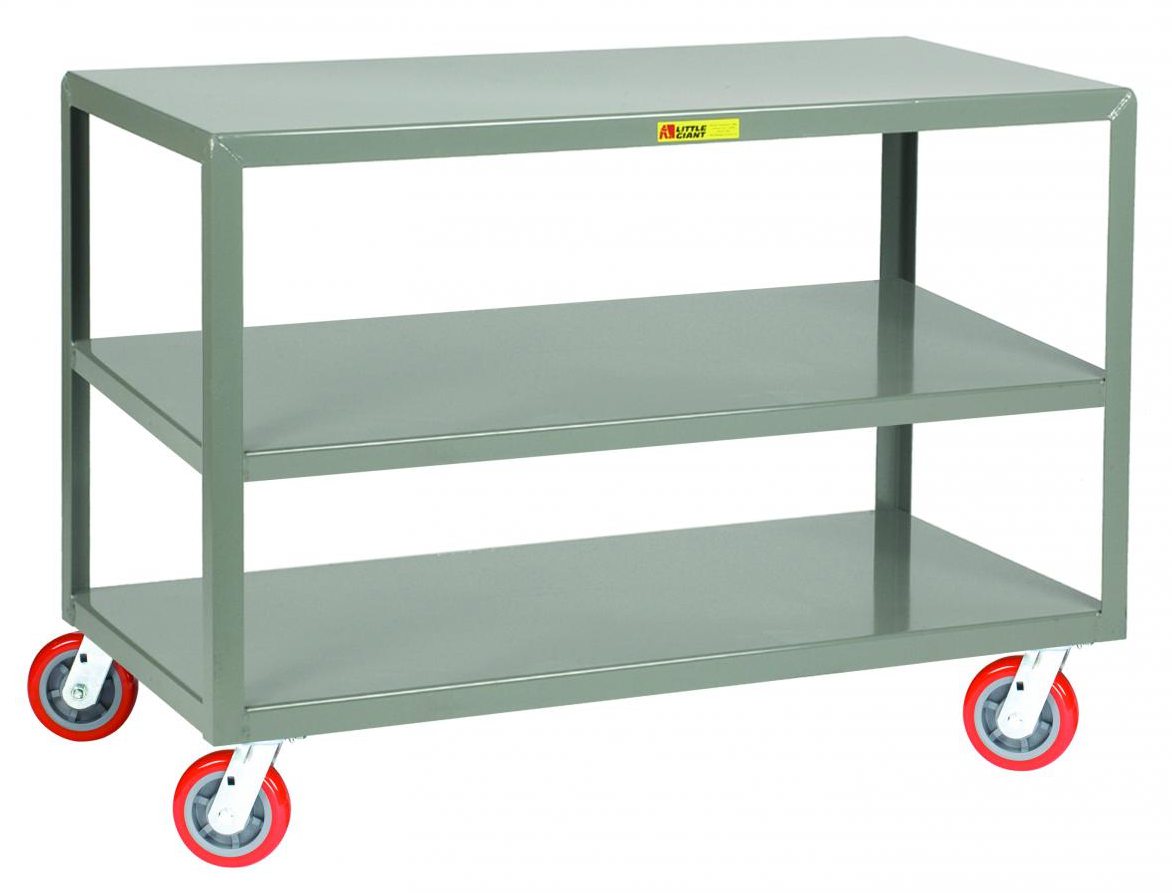
Common Mistakes to Avoid When Buying Transport Carts
Avoid these common buying mistakes:
♦ Choosing a cart with too little weight capacity
♦ Ignoring caster type and floor conditions
♦ Buying a cart that is too large for the aisle layout
♦ Buying a cart that is too small for the load footprint
♦ Overlooking handle height and operator control
♦ Using one general cart for every task
♦ Ignoring brakes or locks when positioning matters
♦ Choosing light-duty carts for daily industrial use
♦ Not accounting for uneven, rough, oily, or debris-covered floors
The cheapest cart is not always the lowest-cost cart. If it fails early, slows down workers, damages materials, or is hard to control, it costs more in the long run.
Quick Buying Checklist
Before choosing a heavy-duty transport cart, confirm:
♦ Maximum load weight
♦ Load dimensions
♦ Required deck size
♦ Number of shelves or levels needed
♦ Cart height
♦ Handle style
♦ Caster type
♦ Floor surface
♦ Travel distance
♦ Aisle width
♦ Doorway clearance
♦ Need for brakes or locks
♦ Environment: dry, wet, oily, clean, corrosive, or rough-use
♦ Frequency of use
♦ Whether the cart will be used by one worker or multiple workers
♦ Whether materials need to be organized, staged, or secured
Need Help Choosing the Right Industrial Transport Cart?
The best heavy-duty transport cart depends on your load weight, cart size, caster requirements, facility layout, and how your team moves materials every day.
Custom Material Handling Solutions offers heavy-duty industrial transport carts for warehouses, manufacturing plants, distribution centers, commercial facilities, maintenance departments, and industrial workspaces.
Shop Heavy-Duty Transport Carts


