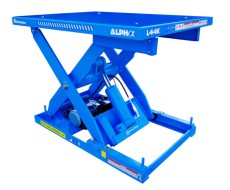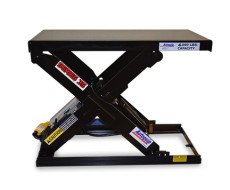
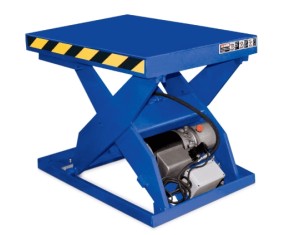
Buying Guide of the Week: Lift Tables & Pallet Positioners
What's the most important spec on a lift table?
Collapsed height, because it decides how the load gets on. A table that only lowers to 7 inches can't be loaded with a pallet jack. Floor level tables go down to about 3/8".
Can I compare my cart's weight to the table's capacity?
No. Rolling loads add impact force, and published guidance says to add 50% to each axle load. A 2,000 lb two-axle cart demands what a 3,000 lb static load would.
Does a bigger platform cost me capacity?
Yes. Edge-load capacity drops about 2% for every inch the platform exceeds the model's minimum size, in each direction. A platform 24 inches wider than minimum loses roughly 48%.
What's the difference between a lift table and a self-leveling positioner?
A positioner rises on its own as cases are removed, keeping the top layer at working height. No one has to press a button, so it can't be skipped when things get busy.
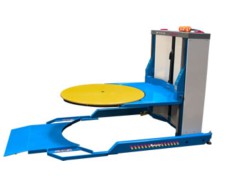
The full guide also covers end vs side loading, double scissor trade-offs, pallet turntables, and the ANSI MH29.1 steps before anyone works under a raised platform.
Read the full Lift Tables & Pallet Positioners Buying Guide
The guide’s line that the sizing rules are industry guidance to confirm against the manufacturer’s data, and that ANSI MH29.1 contains much more than the guide summarizes.