
Jesco Heavy Duty Self-Dumping Formed Base Hoppers
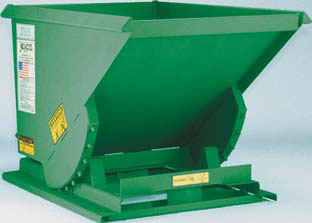
Jesco heavy-duty self-dumping formed base hoppers provide a durable, efficient solution for collecting, transporting, and disposing of scrap metal, production waste, packaging debris, and bulk materials. Designed for forklift operation, these hoppers allow a single operator to handle material collection and dumping without manual unloading, helping reduce labor and improve productivity.
Prices are shown by manufacturer model number.
Compare the exact same item across competitors - no extra searching.
| Model Number | Cubic Volume | Size: L x W x H | Capacity | Price | View Model |
|
1/4 yards
|
49 long x 30-3/4" wide x 26-1/2" high
|
2,000 pounds
|
$1,065.55
|
||
|
.33 yards
|
48-1/2" long x 30-3/4" wide x 31-1/2" high
|
2,000 pounds
|
$1,080.70
|
||
|
1 yards
|
62" long x 41-1/2" wide x 37" high
|
2,000 pounds
|
$1,371.58
|
||
|
1.5 yards
|
62" long x 59-1/2" wide x 37" high
|
2,000 pounds
|
$1,600.85
|
||
|
1/2 yards
|
48-1/2 long x 41-1/2" wide x 31-1/2" high
|
2,000 pounds
|
$1,182.71
|
||
|
2.0 yards
|
64" long x 59-1/2" wide x 46" high
|
2,000 pounds
|
$1,774.57
|
||
|
2.5 yards
|
64" long x 59-1/2" wide x 51" high
|
2,000 pounds
|
$1,846.28
|
||
|
3.0 yards
|
71-1/2" long x 65-1/2" wide x 59-1/2" high
|
2,000 pounds
|
$2,767.40
|
||
|
4.0 yards
|
71-1/2" long x 85-1/2" wide x 59-1/2" high
|
2,000 pounds
|
$2,964.35
|
The heavy-duty formed base construction reinforces the fork-pocket area, where lifting and transporting heavy loads place repeated stress on the hopper. The self-dumping mechanism allows the operator to release and empty the hopper, which automatically returns to its locked position when lowered to the ground.
All nine models feature a 2,000 lb load capacity, with sizes ranging from 1/4 to 4 cubic yards. Smaller hoppers are ideal for confined work areas and low-volume scrap collection, while larger models accommodate higher volumes of manufacturing waste and bulk materials. Choose the hopper size based on the volume of material being collected, available floor space, and total load weight.
Selecting the Right Hopper:
♦ Volume, select the cubic yard capacity that matches the scrap or waste volume generated at the collection position between forklift pickups. The 1/4-yard (211701) and 1/3-yard (211705) models suit compact positions with moderate scrap generation or tight clearance constraints. The 1/2-yard (211711) and 1-yard (211731) models are well-suited for mid-volume production or maintenance scrap collection. The 1.5-yard (211741), 2.0-yard (211751), 2.5-yard (211761), and 3.0-yard (211771) models are well-suited to high-volume manufacturing cells, fabrication areas, and recycling collection points. The 4.0-yard (211781) is the largest format and is best suited to high-volume bulk material-handling applications.
♦ Physical dimensions, cubic volume, determine the physical footprint and height of the hopper. Verify that the selected model fits within the collection position (floor space) and can be accessed by the forklift at the site (aisle width and approach clearance). The 4.0-yard model at 71-1/2" long x 85-1/2" wide x 59-1/2" high is the largest footprint in the lineup and requires careful space planning.
♦ 2,000-pound capacity across all models; all nine models share the same 2,000-pound load rating regardless of cubic volume. This means the limiting factor for most scrap-metal and dense-material applications is weight, not volume. A 1-yard hopper filled with dense scrap metal may reach 2,000 pounds before it is visually full. Plan the collection material type and density against the 2,000-pound limit at any cubic volume.
♦ Formed base vs. standard flat base, the formed base construction provides reinforced structural support in the fork pocket area at the bottom of the hopper. This is the primary load-transfer point where forklift forks engage the hopper during every lift cycle. The formed base distributes stress more effectively than a flat-base design, which is important for hoppers used in high-frequency lifting and dumping cycles over the product's service life.
♦ Self-dumping mechanism: The hopper dumps automatically when the release is activated during the lift cycle. After dumping, the hopper body returns to the upright locked position when set down. This allows one operator to dump and reset the hopper from the forklift seat without leaving the vehicle, which is the defining operational advantage of the self-dumping format over a standard box-style container.
Where Commonly Used:
♦ Metal Fabrication and Machining Shops, machining centers, and fabrication cells collect metal chips, turnings, cutoffs, and scrap in hoppers staged at each machine position. When full, a forklift picks up the hopper and dumps its contents into a dumpster or scrap bin at the facility's scrap staging area, without manual handling of the metal waste.
♦ Manufacturing Production Cells, production cells that generate packaging debris, rejected parts, process waste, or recyclable materials, use hoppers at the cell level to collect waste between forklift pickups, keeping the cell floor clear and reducing the time workers spend carrying waste to remote disposal points.
♦ Warehouses and Distribution Centers, receiving areas that generate large volumes of cardboard, stretch film, packing material, and damaged goods, use hoppers to consolidate waste at the dock without requiring workers to carry material to a dumpster or compactor.
♦ Recycling Collection Operations, facilities separating and collecting recyclable materials by type use multiple hoppers staged at different points to accumulate sorted materials before forklift transport to processing or baling areas.
♦ Foundries and Heavy Industrial Operations, foundries and heavy manufacturing facilities generating dense scrap castings, sprues, risers, and process waste, use the formed base hopper's reinforced construction for daily high-load dumping cycles without structural wear at the fork pocket area.
CustomMHS is an authorized Jesco distributor. All purchases include the manufacturer's factory warranty.