
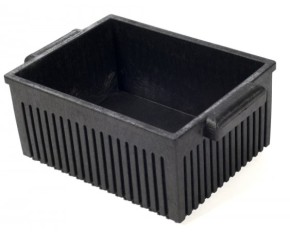
Kadon Solid & Vented Tote Boxes Buying Guide
Choosing the right industrial tote box can improve how your team stores, handles, transports, washes, stages, and organizes parts or materials. In manufacturing plants, warehouses, food processing areas, distribution centers, and stockrooms, the right tote helps reduce clutter, protect products, improve workflow, and make material handling more consistent.
Kadon Solid and Vented Tote Boxes are reusable industrial storage totes designed for daily use in demanding environments. They are available in both solid-wall and vented-wall configurations, giving you the flexibility to choose the best tote style for your application. Solid totes provide contained storage for parts and products, while vented totes allow airflow and drainage for wash-down, drying, cooling, or moisture-sensitive applications.
Whether you are organizing work-in-process materials, storing components, moving inventory between departments, or improving picking areas, this buying guide explains what to look for before purchasing solid or vented tote boxes.
What Are Kadon Solid and Vented Tote Boxes?
Kadon tote boxes are industrial-grade, reusable containers used to store, handle, and transport parts, products, supplies, and materials. They help replace weak cardboard boxes, inconsistent containers, and makeshift storage systems with a stronger, more standardized material handling solution.
These totes are commonly used for:
♦ Manufacturing parts and components
♦ Work-in-process materials
♦ Assembly line supplies
♦ Warehouse inventory
♦ Distribution center picking
♦ Wash-down or drying applications
♦ Food processing and production areas
♦ Maintenance parts
♦ Stockroom organization
♦ Product staging and transport
The linked category page positions these totes for industrial storage, material handling, processing, airflow, and drainage applications. It also notes that Kadon tote boxes are built for repeated use and help standardize the flow of materials through an operation.
Solid vs. Vented Tote Boxes: What Is the Difference?
The biggest buying decision is whether your operation needs solid side totes or vented side totes. Both are useful, but they solve different problems.
Solid Tote Boxes
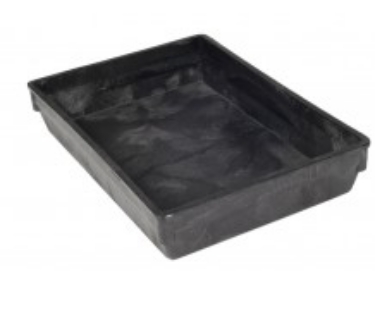
Solid tote boxes have enclosed sides and a solid bottom. They are the better choice when you need containment, product protection, or cleaner separation between stored materials.
Solid totes are best for:
♦ Small parts that could fall through vent openings
♦ Dry goods and packaged products
♦ Manufacturing components
♦ Hardware and maintenance supplies
♦ Inventory that needs better containment
♦ Items that need protection from dust, dirt, or splashing
♦ Applications where leaks, spills, or loose debris need to be contained
Benefits of Solid Sides
Solid sides help keep contents contained and protected. They are useful when storing loose parts, small components, finished goods, or materials that should not fall through openings. They also help reduce mess when handling parts with dust, residue, packaging debris, or small fragments.
Solid tote boxes are typically the better choice when your priority is containment, cleanliness, part protection, and controlled storage.
Vented Tote Boxes
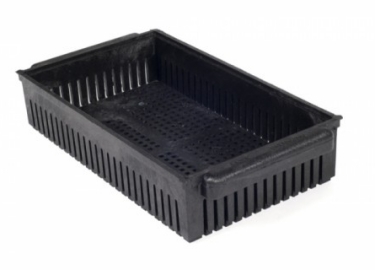
Vented tote boxes have openings in the sides and/or bottom that allow air, water, and debris to pass through. They are the better choice when drainage, drying, cooling, airflow, or visibility is important.
Vented totes are best for:
♦ Wash-down applications
♦ Wet processing areas
♦ Food processing environments
♦ Parts that need to dry after rinsing
♦ Items that benefit from airflow
♦ Applications where water needs to drain out
♦ Materials that should not sit in trapped moisture
♦ Lightweight items that need breathable storage
Benefits of Vented Sides
Vented sides improve airflow and drainage. This makes vented totes especially useful in wet, humid, wash-down, or processing environments where water needs to drain quickly, and contents need to dry faster. Your current page also identifies vented totes as a good fit for applications requiring airflow, drainage, or quick drying.
Vented tote boxes are typically the better choice when your priority is air circulation, water drainage, faster drying, and moisture control.
How to Purchase the Right Kadon Tote Box
Before ordering, start by matching the tote design to your workflow. Do not just choose based on size or price. The right tote should fit the product, the process, the storage location, and the way employees handle materials throughout the day.
1. Choose Between Solid and Vented Sides
Start with the application.
Choose solid totes when you need to contain loose parts, protect contents, reduce mess, or store dry goods.
Choose vented totes when you need airflow, drainage, drying, rinsing, cooling, or wash-down compatibility.
This is the most important decision because the wrong style can create operational problems. A vented tote used for tiny parts may allow items to fall out. A solid tote used in wet processing may trap water and slow down drying.
2. Confirm the Size You Need
Check the length, width, and height before purchasing. The tote needs to fit your shelves, carts, workstations, pallet layouts, wash areas, storage racks, or processing equipment.
The linked product page includes multiple Kadon tote sizes, including options such as 15" x 10" x 6", 19" x 10" x 3.5", 22" x 13" x 6", and 20" x 14" models in different heights.
Before buying, measure:
1) Shelf depth
2) Shelf height clearance
3) Cart or rack dimensions
4) Workstation space
5) Aisle clearance
6) Storage location width
7) Product size and quantity per tote
3. Check the Weight Capacity
Weight capacity matters, especially when storing metal parts, hardware, tools, machine components, or dense products.
The linked Kadon page lists models with 100-lb and 150-lb capacities, depending on the model.
Before purchasing, ask:
1) How heavy will the tote be when full?
2) Will employees lift it by hand?
3) Will it be stacked?
4) Will it be moved on carts, conveyors, or racks?
5) Will it hold dense parts or lighter products?
Do not overload totes beyond their rated capacity. Overloading can make handling unsafe and shorten the container's lifespan.
4. Consider Stackability and Storage Efficiency
Stackable tote boxes help save floor space and improve organization. This is especially important in crowded production areas, inventory rooms, distribution centers, and staging zones.
Your current page notes that Kadon tote boxes are designed to stack securely, helping to maximize storage space and improve material-handling efficiency.
Stackable totes can help:
♦ Reduce clutter
♦ Improve vertical storage
♦ Keep materials grouped by process or department
♦ Support cleaner staging areas
♦ Make inventory easier to manage
♦ Standardize storage across multiple locations
5. Match the Tote to the Environment
A dry manufacturing area may need a different tote than a wash-down area, food processing line, or damp storage location.
Use solid totes for:
♦ Dry storage
♦ Parts rooms
♦ Assembly components
♦ Hardware
♦ Maintenance inventory
♦ Finished goods
♦ Dust-sensitive items
Use vented totes for:
♦ Wet areas
♦ Wash-down zones
♦ Drainage applications
♦ Food processing
♦ Items that need airflow
♦ Parts that are rinsed or dried
♦ Moisture-sensitive workflows
6. Think About Handling and Ergonomics
A tote may technically fit the product, but still be a poor choice if it becomes too heavy, awkward, or inefficient to handle.
Before buying, think through the full handling process:
1) Who will lift the tote?
2) How often will it be moved?
3) Will it be carried, stacked, carted, or staged?
4) Will employees pick directly from the tote?
5) Will the tote be used in a high-volume area?
6) Does the tote need to move between departments?
The best tote is not always the largest one. In many operations, a smaller tote that stays manageable when full is the better long-term choice.
How These Totes Help Manufacturing Facilities
Manufacturing operations rely on repeatable processes. When parts and materials are stored in inconsistent containers, employees waste time searching, sorting, transferring, and cleaning up. Solid and vented tote boxes help create a more organized and predictable workflow.
Better Material Flow
Reusable tote boxes help standardize the movement of parts from receiving to storage, from storage to production, and from production to shipping. Standard containers reduce confusion and make it easier for employees to know where materials belong.
Improved Work-in-Process Handling
Manufacturers often need to move parts between machining, assembly, inspection, cleaning, packaging, and staging. Tote boxes make it easier to move work-in-process materials without relying on cardboard boxes or loose piles of parts.
Reduced Product Damage
Durable tote boxes help protect contents during handling and transport. Solid totes provide better containment, while vented totes help prevent water or moisture from sitting inside the container.
Cleaner Production Areas
Standardized totes reduce clutter around production lines, benches, and storage areas. This helps improve housekeeping and makes parts easier to identify.
Better Support for Wash or Drying Processes
Vented tote boxes are especially helpful when parts or products need to be washed, rinsed, drained, or dried. They allow water to pass through and airflow to reach the contents.
How These Totes Help Distribution Centers
Distribution centers need speed, accuracy, and space efficiency. The right tote system can help improve picking, staging, replenishment, and inventory flow.
Faster Picking and Replenishment
When products are stored in standardized totes, employees can identify, move, and replenish inventory more efficiently. This can help reduce wasted motion and improve picking consistency.
Better Inventory Organization
Totes can be grouped by SKU, order type, department, batch, zone, or workflow. This makes storage locations easier to manage and helps reduce picking mistakes.
More Efficient Staging
Distribution centers often need to stage products before packing, shipping, inspection, or transfer. Tote boxes provide a cleaner, repeatable way to hold and move inventory through each step.
Improved Space Utilization
Stackable totes help use vertical space more efficiently. This is valuable in pick modules, shelving rows, packing areas, and stockrooms where every square foot matters.
Better Handling for Returns and Processing
Solid totes are useful for contained returns, loose items, and mixed products. Vented totes are useful when products need airflow, cleaning, or drying before they return to inventory.
What to Look for Before Buying
Use this checklist before placing an order:
♦ Solid or vented side design
♦ Outside dimensions
♦ Inside usable space
♦ Weight capacity
♦ Stackability
♦ Material type
♦ Wash-down or dry-use requirements
♦ Drainage needs
♦ Airflow needs
♦ Part size and product type
♦ Storage location
♦ Handling method
♦ Quantity needed
♦ Labeling requirements
♦ Freight and delivery requirements
♦ Volume pricing availability
The current page notes that many Kadon tote products include quantity price breaks and that customers can contact the team for volume purchases or facility-wide orders.
Recommended Buying Approach
For most facilities, the best approach is to standardize on a few tote sizes rather than buying too many different containers. This makes storage, replacement, stacking, labeling, and employee training easier.
A smart buying process looks like this:
1) Identify the materials or products being stored.
2) Decide whether solid or vented sides are required.
3) Measure the storage and handling area.
4) Confirm the loaded weight of the tote.
5) Select the correct tote size and capacity.
6) Determine the number of totes needed by department or workflow.
7) Review quantity pricing.
8) Place the order or request help for volume purchasing.
Common Applications
Kadon Solid and Vented Tote Boxes are a good fit for:
♦ Manufacturing plants
♦ Distribution centers
♦ Warehouses
♦ Food processing facilities
♦ Assembly operations
♦ Maintenance departments
♦ Stockrooms
♦ Wash-down areas
♦ Product drying areas
♦ Order picking zones
♦ Work-in-process handling
♦ Parts storage
♦ Material staging
♦ Returns processing
Kadon Solid & Vented Tote Boxes >
Need help choosing between solid and vented tote boxes? Contact Custom MHS for product guidance, quantity pricing, and help selecting the right Kadon industrial tote boxes for your manufacturing facility, warehouse, or distribution center.