Hallowell Steel Decking Bulk Rack (Open-Back): When Heavy Inventory Needs Real Stability
Hallowell Steel Decking Bulk Rack (Open-Back)
A practical guide to heavy-duty shelving that stays stable under real warehouse use
When shelving starts to sway, bow, or loosen over time, the issue is rarely “bad luck.” It’s usually a mismatch between daily handling and what the rack was built to tolerate. Bulk inventory, dense parts, heavy cartons, and shop-floor supplies put constant stress on frames and shelf surfaces.
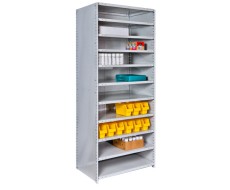
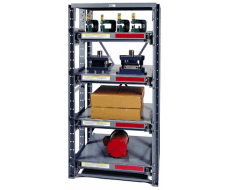
The Hallowell Steel Decking Bulk Rack (Open-Back) is designed for that reality. It combines steel decking shelves with heavy-gauge welded uprights and side-sway bracing, so the rack stays rigid under heavy loads and repeated loading cycles.
Just as important, the open-back design can improve flow in busy areas because teams can replenish from one side and pick from the other.
What “Open-Back” Actually Means and Why It Helps
Open-back shelving is more than a design detail. It supports smarter movement in high-traffic zones.
Common workflow advantage
♦ Stock from the rear
♦ Pick from the front
♦ Reduce aisle congestion
♦ Keep replenishment from interrupting picking
This is especially useful in:
♦ staging lanes
♦ replenishment behind pick faces
♦ two-sided access areas near packing or assembly
If your operation has bottlenecks from people and equipment trying to use the same aisle at the same time, open-back access is a simple way to reduce friction.
Why Steel Decking Matters for Heavy Inventory
Steel decking shelves create a solid, durable surface that holds up better than lighter shelves when storing dense or bulky items.
What it does for you
♦ Better support for heavy cartons and dense parts|
♦ Less shelf deflection under load
♦ More confidence in storing high-value or heavy items
If you routinely store items that concentrate weight in a small footprint, like motors, pumps, fittings, tooling, or boxed parts, steel decking tends to hold up better over time.
Stability: The Real Difference Between “Heavy Duty” and “Warehouse Duty”
Lots of systems claim “heavy duty,” but what users feel day to day is stability. This rack is built to stay rigid because of two structural choices:
Side-sway bracing
♦ Helps prevent racking and wobbling
♦ Keeps the unit aligned after repeated loading
♦ Improves safety and confidence when pulling heavy items
Welded heavy-gauge uprights
♦ Maintains rigidity under repeated stress
♦ Reduces loosening compared to lighter frame designs
♦ Supports long-term use in busy areas
If your current shelving feels tight on install day and sloppy six months later, these are the features that typically fix that problem.
Capacity and Adjustability: Use Vertical Space Without Creating Risk
Configured appropriately, this rack supports up to 3,800 lb per shelf. That matters, but capacity is only useful when you can safely fit inventory.
Adjustable shelf levels let you:
♦ slot inventory by size and turnover
♦ reduce wasted vertical space
♦ keep heavy products stored lower for safer handling
♦ reserve upper levels for lighter, slower-moving inventory
A good bulk rack setup is not just “as high as possible.” It’s “as safe and accessible as possible.”
Highlights
♦ Up to 3,800 lb per shelf when configured appropriately
♦ Open-back access for faster replenishment and picking
♦ Steel decking shelves for industrial wear and heavy loads
♦ Heavy-gauge welded uprights for long-term strength
♦ Side-sway bracing to reduce racking and wobble
♦ Adjustable shelf heights to fit changing inventory
Typical Industrial Uses
Warehouses and Distribution
♦ bulk carton and case storage
♦ reserve inventory behind pick locations
♦ two-sided staging lanes and replenishment zones
Maintenance and MRO Rooms
♦ motors, pumps, fittings, tooling, dense spare parts
♦ heavy consumables and backroom industrial supplies
Parts Departments
♦ organized heavy parts bins and boxed inventory
♦ replenish from the back while pulling from the front
Manufacturing and Shop Floor
♦ fixtures, components, and consumables
Kitting and assembly support storage
Why Add-On Units Matter
Add-on units reduce redundant uprights, thereby saving both cost and space while maintaining the same shelf structure and capacity characteristics.
In plain terms, add-ons let you build longer runs more efficiently, which is often the right move when you have predictable bulk storage needs.
Who Should Buy This Rack
This system is a strong fit if you need:
♦ serious shelf capacity up to 3,800 lb per shelf
♦ stability that stays rigid after months and years of use
♦ two-sided access for faster workflow
♦ adjustable shelving for oversized or changing inventory
♦ warehouse-grade construction for daily handling
If your inventory is light, your aisle traffic is low, or the rack will rarely be handled, you may not need this level of structure. But if the rack will be worked hard, this is the type that holds up.
Bottom Line
If your environment is busy, your inventory is heavy, and you need shelving that stays stable every day, not just on install day, the Hallowell Steel Decking Bulk Rack (Open-Back) is built for that job. It provides the rigidity, workflow access, and adjustability that standard shelving systems struggle to maintain under real warehouse use.
Starter vs. Add-On Units
Starter Unit (Standalone)
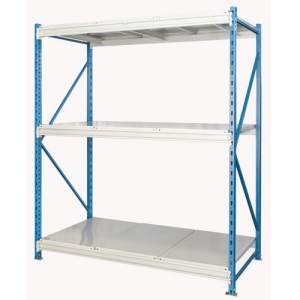
♦ Includes two uprights and three steel-deck shelves
♦ Works as a standalone rack
♦ 2 uprights + 3 steel-deck shelves
♦ Best when you need a single rack or you’re starting a row
Add-On Unit (Expands a Row)
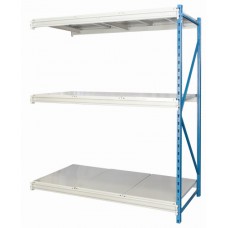
♦ 1 upright + 3 steel-deck shelves
♦ Shares an upright with the starter unit to build a continuous run
♦ Best for long rows—more shelving, less steel, better value per foot
-230x190.jpg "Modular Drawers vs Shelving: Does the 70% Space Savings Claim Hold Up?")