Machine Guarding Systems for Safer Manufacturing and Distribution Centers
Machine guarding systems are one of the most practical safety upgrades a manufacturing plant or distribution center can make. In busy industrial environments, employees work around machinery, conveyors, automated equipment, forklifts, and production lines every day. When hazardous moving parts are left exposed, the risk is obvious: accidental contact can lead to crushed hands, amputations, burns, eye injuries, and costly downtime. OSHA requires machines to be safeguarded when any part, function, or process could cause injury, including hazards from the point of operation, ingoing nip points, rotating parts, flying chips, and sparks.
For operations managers, safety directors, plant engineers, and warehouse leaders, machine guarding is not just about checking a compliance box. It is about protecting people, reducing preventable losses, and keeping operations running without disruption.
What Are Machine Guarding Systems?
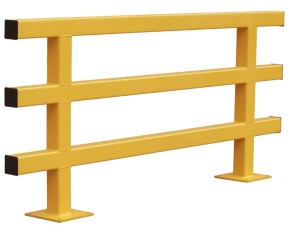
Machine guarding systems are protective barriers designed to keep employees separated from dangerous machine motion and hazardous operating zones. These systems help prevent accidental contact while still allowing the visibility and access needed for normal operation, inspections, and maintenance. OSHA identifies barrier guards as one of the acceptable safeguarding methods for reducing exposure to machine hazards.
Common machine guarding applications include:
- Rotating parts
- Ingoing nip points
- Reciprocating motion
- Transversing motion
- Areas where chips, debris, or sparks are generated
- Machinery located near forklift traffic or high-movement zones
In real facilities, that can mean protecting equipment near aisles, staging lanes, conveyor lines, robotic cells, electrical panels, work cells, and other high-risk areas where both people and equipment are exposed.
Why Machine Guarding Matters in Manufacturing and Distribution
In manufacturing and distribution centers, machine hazards do not exist in isolation. A production machine may sit right next to a forklift lane. A conveyor may run near an employee walkway. A maintenance access point may need to stay reachable without leaving a dangerous area exposed.
That is why machine guarding systems serve two purposes at once:
First, they help protect employees from contact with hazardous machine motion.
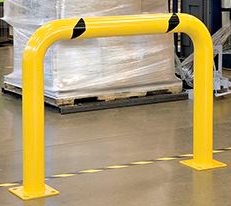
Second, they help protect expensive equipment from incidental impact, especially in facilities where forklifts, pallet jacks, carts, and other moving equipment operate close to machinery.
Your indexed Custom MHS content already reflects this operational reality. Related machine protection pages emphasize physical separation between moving traffic and critical assets, especially in manufacturing plants, warehouses, and distribution centers, where downtime is expensive, and traffic density is high.
OSHA Compliance Is a Real Business Issue
OSHA’s general machine guarding standard, 29 CFR 1910.212, says that one or more methods of guarding must be provided to protect operators and other employees in the machine area from hazards such as point of operation, ingoing nip points, rotating parts, flying chips, and sparks.
That matters because noncompliance is not just a regulatory problem. It can turn into:
- Employee injuries
- Investigations and citations
- Increased workers’ compensation costs
- Equipment damage
- Unplanned shutdowns
- Lost production time
- Higher long-term maintenance expense
For most facilities, the real cost of poor guarding is not limited to one incident. It compounds across labor, repair costs, output delays, and operational risk.
Where Machine Guarding Systems Add the Most Value
Not every hazard looks the same, so the best guarding strategy starts with identifying high-risk areas first.
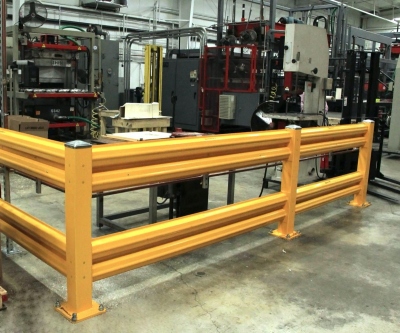
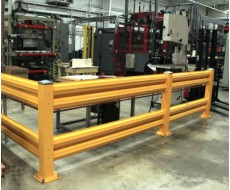
In manufacturing plants, machine guarding systems are often installed around presses, work cells, assembly lines, conveyor systems, fabrication equipment, and areas where operators work close to moving parts.
In warehouses and distribution centers, they are especially valuable around conveyor systems, sortation equipment, automated systems, packing lines, electrical equipment, and any machinery positioned near forklift traffic or narrow travel lanes.
The highest-priority zones usually include:
- Machine perimeters exposed to traffic
- Equipment near forklift aisles
- Conveyor edges and transfer points
- Automated or robotic work areas
- Maintenance zones requiring controlled access
- Areas where debris, chips, or sparks may be produced
When facilities start with the most exposed and highest-consequence areas, they usually see the fastest return from reduced damage, fewer disruptions, and better overall risk control.
What to Look for in a Machine Guarding System
Not all guards are built for the same environment. In industrial settings, the right system should do more than just exist on paper. It should match the facility's reality.
A good machine guarding system should offer:
Durability
Industrial guards need to withstand daily abuse, especially in environments with forklifts, pallets, carts, and frequent equipment movement.
Visibility
Employees and vehicle operators need to be able to clearly see protected zones. High-visibility finishes help reinforce awareness and safe navigation.
Access Where Needed
A guard should not make maintenance harder than it has to be. In some environments, removable or modular guarding makes more sense than a fully fixed system.
Fit for the Layout
The best guarding solution matches the facility's machine footprint, travel paths, work processes, and service access requirements.
Compliance Support
The system should help support a broader safeguarding plan aligned with OSHA requirements and the real hazards present in the work area.
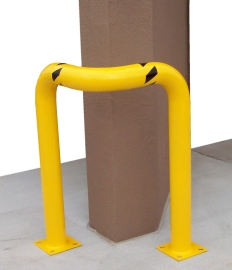
Your indexed Custom MHS product content already addresses these practical concerns, especially regarding welded-steel construction, visibility, removable configurations, and the protection of equipment near aisles and travel lanes.
The Operational Payoff
Facilities that invest in machine guarding systems are not just trying to avoid worst-case outcomes. They are making operations more stable.
Proper guarding can help:
- Reduce preventable injuries
- Lower exposure to machine-related hazards
- Protect equipment from impact
- Prevent repair-related downtime
- Improve traffic separation and organization
- Support safer workflows for operators and nearby personnel
- Strengthen long-term operational reliability
In other words, machine guarding is not overhead. It is infrastructure for safer, more predictable operations.
Final Takeaway
If a machine part, motion, or process can injure someone, it needs to be safeguarded. That is OSHA’s position, and it is also just common operational sense.
For manufacturing plants and distribution centers, machine guarding systems help create clear physical separation between people, vehicles, and hazardous equipment. They reduce injury risk, support OSHA compliance, protect valuable assets, and reduce downtime that wrecks productivity.
When properly selected and installed, machine guards do more than protect a machine. They protect the flow of the entire operation.