How to Meet DEA Controlled Substance Storage Requirements in Warehouses: WireCrafters DEA Cages for Secure, Compliant Drug Control
How to Meet DEA Specifications for Controlled Substance Storage
If your facility stores controlled substances, the DEA expects effective controls and procedures that prevent theft and diversion—not just a locked door. The baseline requirement is clear: registrants must provide “effective controls and procedures” to guard against diversion, and DEA uses the standards in 21 CFR 1301.72–1301.76 to evaluate whether you’ve done that.
Know what you’re storing (because the schedule drives security)
DEA physical security expectations vary depending on whether you handle Schedule I–II vs Schedule III–V controlled substances. Schedule I–II typically requires the highest level of security, while Schedule III–V can be stored in approved secure areas such as certain cages/rooms/cabinets that meet the applicable standards in 21 CFR 1301.72(b).
Build a “secure storage area” that meets the standard
For Schedule III–V storage, the regulation describes acceptable secure storage areas and also references key construction/security characteristics (including self-closing/self-locking doors in certain configurations and alarm expectations depending on the approved method).
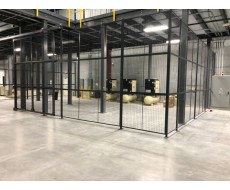
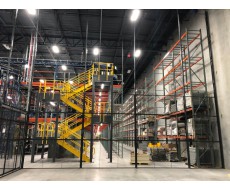
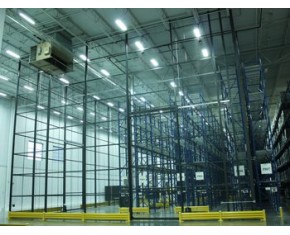
That’s where a properly installed DEA cage comes in: it creates a controlled-access perimeter inside a warehouse or distribution environment—without building permanent masonry vaults.
How to Control Drugs in a Warehouse: Physical Security + Operating Controls
DEA compliance isn’t just the cage. It’s the system around it—who can get in, how access is tracked, what happens when counts don’t match, and how quickly you report losses.
Here’s what a strong “drug control” program looks like in practice:
Access control that’s tight and provable
♦ Limit access to authorized personnel only (role-based access)
♦ Use electronic access (badge, keypad) where appropriate
♦ Maintain access logs (who entered, when, and why)
♦ Immediate credential removal when roles change
Inventory accountability (the part that prevents diversion)
♦ Receiving controls: verify quantities against documentation at receipt
♦ Cycle counts: scheduled counts of controlled items (more frequent for higher-risk SKUs)
♦ Discrepancy workflow: escalation path for shortages/overages
♦ Segregation of duties: receiving, counting, issuing when possible

Incident response and required reporting
If theft or a significant loss occurs, DEA requires prompt action. DEA guidance and regulation require registrants to notify the local DEA field division within one business day of discovery and submit a DEA Form 106 electronically within the required timeframe.
Key DEA Cage Construction Features (why they matter)
These design elements align with common DEA cage expectations for strength, tamper resistance, and controlled entry:
♦ Self-closing, self-locking doors
♦ 10-gauge wire wall & ceiling panels
♦ 2" x 1" rectangular mesh
♦ 2" square steel posts, set no more than 10' apart, with base plates for anchoring
♦ Reinforcement members at regular intervals
♦ Heavy-duty hardware is not accessible from the exterior
(Those features are also consistent with published WireCrafters Style 840 specs and commonly referenced DEA cage feature sets.)
Project Spotlight: Large-Scale DEA Cage Installation in a Cold Warehouse
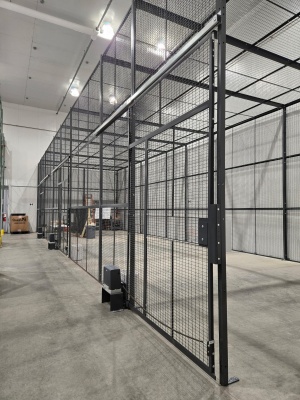
For one warehouse project, we are installing a WireCrafters DEA cage measuring:
♦ 18’-9” wide x 64’-10” long x 15’-2” high
♦ Located in a 38-degree warehouse environment
Door and security package (built for operational reality)
This installation includes:
♦ Three 6’ sliding doors
♦ Motorized openers/closers
♦ Mag locks
♦ Battery backup (critical for maintaining control during outages)
We’re also installing a secondary secure enclosure:
♦ 6’-0” wide x 8’-0” long x 8’-2” high
♦ Fully enclosed (4-sided) cage
♦ Self-closing and self-locking door
This type of “layered security” approach is often what makes a controlled substance program workable in a high-traffic DC: you’re not relying on one barrier—you’re creating zones.
Installation Matters: Why Assembly Quality Affects Compliance
A DEA cage is only as strong as its installation. Poor anchoring, gaps at the floor, misaligned panels, or improper door setup can create vulnerabilities and audit risk.
For professional assembly and installation, we partner with:
Ellington Specialties, LLC ([email protected])
We’ve collaborated successfully for years and recommend them for installations across the Southeastern region.
DEA Cage Configurations: Flexible Layouts Without Facility Redesign
WireCrafters’ modular approach makes it easier to design a cage around your facility’s footprint, workflows, and security plan—whether you need:
♦ Long runs inside a warehouse
♦ A fully enclosed “cage within a cage” for higher-risk items
♦ Sliding doors to support pallet or cart movement
♦ Integration with electronic access control (mag locks, strikes, keypads, card readers)
(What matters most is that the final secure area meets the applicable security standard for the schedules you store and the risk profile of the site.)
Practical DEA Storage Compliance Checklist for Warehouses
Use this as a buyer-friendly checklist:
Physical
♦ Cage walls + ceiling are secure and continuous
♦ Panels are anchored, and gaps are eliminated
♦ Doors are self-closing/self-locking where required by your configuration
♦ Locking + access control is tamper-resistant
♦ Power outage plan exists (battery backup / fail-secure decisions)
Operational
♦ The authorized user list is maintained and reviewed
♦ Access is logged and auditable
♦ Inventory counts occur on a defined schedule
♦ Discrepancies trigger escalation
♦ Theft/loss response plan includes DEA reporting requirements (Form 106 process)
Final Takeaway
DEA compliance is not just “install a cage.” It’s secure construction + controlled access + repeatable accountability. WireCrafters DEA cages are a strong solution for warehouses and distribution centers that need secure storage for controlled substances—especially when paired with the right access control, monitoring, and inventory procedures.
If you’re planning a DEA cage project and want it done right the first time, contact CustomMHS for a tailored quote and layout support.