Self-Dumping Hoppers Buyer’s Guide
Self-dumping hoppers are built for one job: collecting, moving, and dumping bulk material safely and efficiently with a forklift. They are widely used in warehouses, manufacturing plants, scrap handling, construction supply yards, recycling operations, and maintenance departments.
They save time, reduce manual handling, and make it easier to control waste, scrap, chips, and other loose material. But buyers get into trouble when they buy based on price alone and ignore capacity, dump release style, and actual material type.
What is a self-dumping hopper?
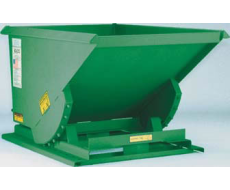
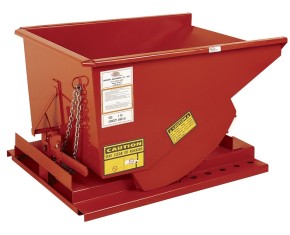
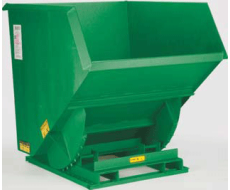
A self-dumping hopper is a heavy-duty steel container designed to be lifted by a forklift and tipped forward automatically when the front edge contacts a dumpster or designated dump point. Most models then return to the locked position after dumping.
Why buy a self-dumping hopper?
Most buyers choose self-dumping hoppers for four main reasons.
1. Faster material handling
They let operators move and dump loads without manual shoveling or unloading.
2. Better safety
They reduce repeated lifting, awkward dumping, and handling loose waste.
3. Cleaner operations
They help contain scrap, debris, and waste, preventing them from building up on floors or in open piles.
4. Better forklift efficiency
A forklift can transport and dump material with less labor and time than manual bins or fixed containers.
What to look for when buying a self-dumping hopper
Not all hoppers are built the same. These are the things that matter before you buy.
Capacity and size
Start with the hopper’s cubic yard capacity and actual outside dimensions.
Typical questions:
♦ How much material does it hold?
♦ Will it fit in the space where it will be loaded?
♦ Does the footprint work with your forklift and aisles?
♦ Is the hopper too large for the actual waste stream?
Buying too large can create unsafe overweight loads. Buying too small creates too many trips.
Weight capacity
This is one of the biggest things buyers miss.
You need to know:
♦ The hopper’s rated load capacity
♦ The weight of the material being collected
♦ The lifting capacity of your forklift
♦ Whether the load is light and bulky or small and dense
A hopper full of cardboard is completely different from a hopper full of steel scrap or wet sand. Dense materials can overload a hopper fast.
Dumping mechanism
Different models dump and reset differently.
Look for:
♦ Automatic self-dump action
♦ Manual release options if needed
♦ Return-to-lock design
♦ Release cable or pull handle options
♦ Dump control and operator convenience
Some operations want simple automatic dumping. Others want controlled release from the seat of the forklift.
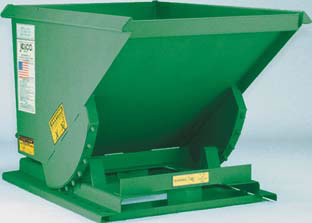
Fork pocket design
Make sure the fork pockets match your equipment.
Check:
♦ Fork pocket width and height
♦ Fork spacing compatibility
♦ Usable fork length
♦ Whether a safety restraint or retaining chain is included
♦ How securely the hopper stays on the forks during travel and dumping
A hopper that does not fit the forklift correctly is a bad buy, no matter how strong it is.
Construction quality
This matters a lot in real industrial use.
Look for:
♦ Steel gauge and plate thickness
♦ Reinforced base
♦ Strong fork tubes
♦ Full welds, not light-duty spot construction
♦ Durable latch and pivot design
♦ Structural strength around the dump point
If the hopper will handle scrap metal, dense debris, or repeated impact, build quality matters more than appearance.
Base style
Self-dumping hoppers come with different bottoms and base options.
Common considerations:
♦ Flat bottom or formed bottom
♦ Skid base
♦ Caster-ready or caster-mounted versions
♦ Low-profile or standard profile
Casters can improve mobility, but they are not ideal for every application. Heavy loads and rough surfaces can change that fast.
Finish and environment
Consider where the hopper will be used.
Look for:
♦ Painted finish for general indoor use
♦ Powder-coated or tougher finishes where appearance and durability matter
♦ Corrosion-resistant options for wet or outdoor environments
♦ Drainage or special finishes if liquids or wet waste are involved
♦ Standard painted steel is fine for many uses, but not all.
Load type and flow
The kind of material matters.
Ask:
♦ Does the material flow easily when dumped?
♦ Will it stick inside the hopper?
♦ Is it bulky, stringy, sharp, abrasive, or wet?
♦ Could it bridge and hang up instead of discharging cleanly?
Some materials dump easily. Others need steeper sides or smoother interiors.
Safety features
Do not skip this.
Look for:
♦ Locking latch mechanism
♦ Safety restraint to secure the hopper to forks
♦ Stable base design
♦ Predictable dump action
♦ Optional release from operator position
♦ Clear load rating labels
The hopper should reduce risk, not create new risk.
Total value, not just unit price
Cheap hoppers often show weaknesses in the fork channels, latches, pivots, and welds.
Compare:
♦ Price
♦ Steel thickness
♦ Capacity rating
♦ Dump mechanism design
♦ Finish quality
♦ Lifespan in your environment
♦ Replacement risk
Best uses for self-dumping hoppers
Self-dumping hoppers are best when the material is loose, messy, repetitive, and forklift handling is already part of the workflow.
They are especially useful for:
♦ Scrap metal collection
♦ Manufacturing waste
♦ Recycling glass
♦ Warehouse trash handling
♦ Machining chip collection
♦ Plastic trim or cutoffs
♦ Wood scrap
♦ Packaging waste
♦ Construction debris
♦ Maintenance cleanup
When they are a great fit
They make the most sense when:
♦ A forklift is already available
♦ Material needs to be collected from multiple areas
♦ Loads are too heavy or bulky for manual dumping
♦ Waste is generated continuously}
♦ Clean floors and fast disposal of matter
When self-dumping hoppers may not be the best option
They are not the right answer for every situation.
You may want something else if:
♦ You do not have forklift access
♦ You need sealed liquid containment
♦ You need highly precise dispensing rather than dumping
♦ You need very small indoor collection bins
♦ You are handling hazardous material that requires specialized containment
Your application requires an overhead crane for dumping instead of forklift dumping
In those cases, a tilt truck, a stationary bin, a drum handler, a bulk container, or a specialized hazardous waste container may be a better fit.
Final recommendation
Self-dumping hoppers are a strong choice for operations that need fast, repeatable forklift-based dumping of scrap, waste, chips, or bulk material. They improve efficiency, reduce manual handling, and help keep facilities cleaner.
They are especially valuable when:
♦ Forklift access is already part of the workflow,
♦ Material handling is repetitive,
♦ Loads are too bulky or heavy for manual dumping,
♦ Waste needs to be moved safely and quickly.
The right hopper comes down to five things: material type, load weight, forklift compatibility, dump mechanism, and build quality.
-230x190.jpg "Modular Drawers vs Shelving: Does the 70% Space Savings Claim Hold Up?")
-230x190.jpg "Davco KD2GS-01 Collapsible Steel Bulk Container: Specs, Benefits & Industrial Uses")